
London
Info
AT-2026, 120 Min.
Buch, Regie Sebastian Brameshuber | Kamera Klemens Hufnagl, Patrick Wally | Schnitt Dane Komljen, Sebastian Bramesuber | Ko-Autorin Script Anna Lehner | Ton Nora Czamler, Matthias Kassmannhuber | Sound Design Johannes Schmelzer-Ziringer, Aleksa Stojanovic | Tonschnitt Geoffrey Perrier | Tonmischung Simon Apostolou | Szenenbild, Kostümbild Bárbara Palomino Ruiz | Herstellungsleitung Camille Chanel | Ko-Produzent Sebastian Brameshuber | Produziert von David Bohun, Lixi Frank | Eine Panama Film Produktion mit der Unterstützung von Film Institut öfi/öfi+, Filmfonds Wien, Kulturland Niederösterreich, Ober Österreich, Land Salzburg, ORF Film/Fernseh-Abkommen, script LAB, Austrian Films | Weltvertrieb Square Eyes
mit Bobby Sommer, Paul Schild, Asja Ahmetovic, Akin Özuckun, Jon Agolli, Veronika Harb, Anca Cipariu, Clifford Agu, Ted Fendt, Polina Skomorokhova, Lana Prerad
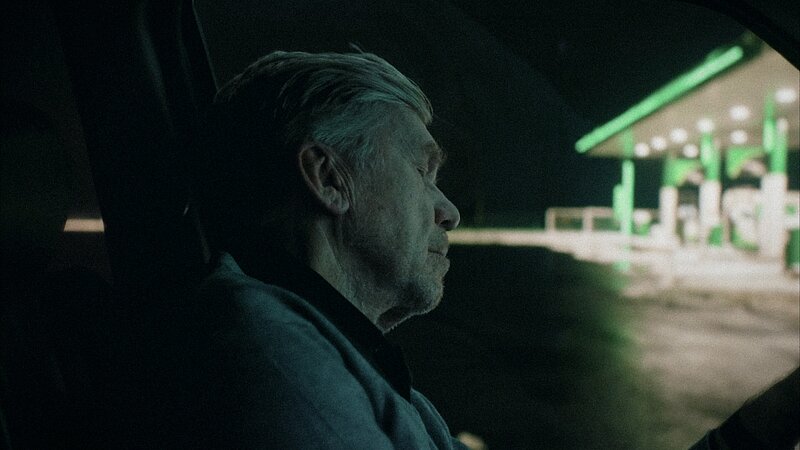
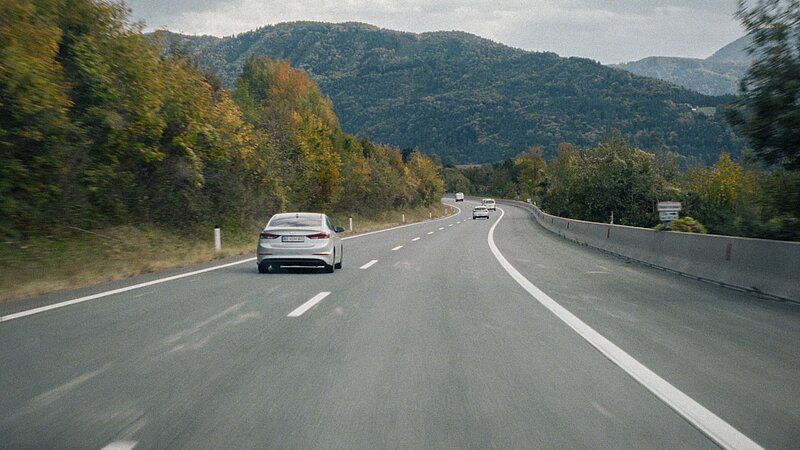
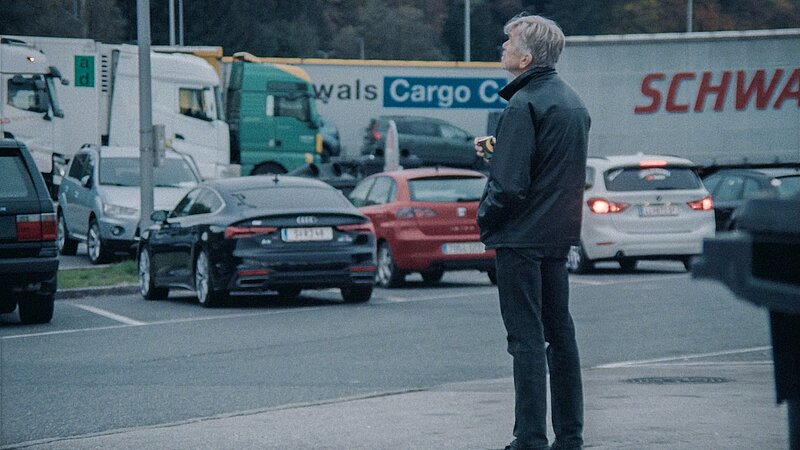
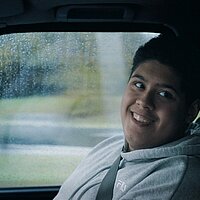
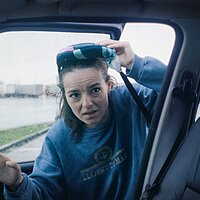
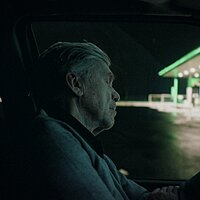
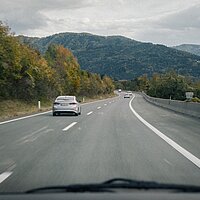
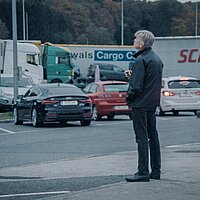
Bobby ist fast immer im Auto, unterwegs auf der Autobahn zwischen Wien und Salzburg. Andere Menschen legen dieselbe Strecke zurück; er nimmt sie mit, um Benzinkosten zu sparen, und kommt mit ihnen ins Gespräch: mit dem Soldaten, der darüber nachdenkt, was es heißt, zu kämpfen; mit dem Supermarktlehrling auf dem Weg zu seiner Familie; mit dem Wissenschaftler, der sich mit der Geschichte der Autobahn beschäftigt; mit der queeren Frau, die kurz vor ihrer Hochzeit steht. Unterschiedliche Wege, unterschiedliche Akzente, unterschiedliche Geschichten – die meisten davon wahr. Bobby hört zu, spricht aber auch über sich selbst: über seine Jugend, über das Älterwerden, über seinen Freund, der in Salzburg im Koma liegt und der der Grund für all diese Fahrten ist. Draußen ziehen Berge und Wälder vorbei, unterbrochen von Kreuzungen, Schranken und Brücken; mit den Jahreszeiten wechseln die Lichtverhältnisse. Weder Dokumentarfilm noch reine Fiktion ist LONDON ein leises politisches Porträt des heutigen Europas, erzählt anhand seiner Zwischenräume und der Menschen, die sie durchqueren. Selbst in diesen beunruhigenden Zeiten können Anonymität und Warmherzigkeit noch Hand in Hand gehen.
Spieltermine
Kinostart: 06.11.2026
(in Oberösterreich 30.04.2027)
(in Deutschland 15.10.2026 mit Grandfilm)
Pressespiegel
„Ein kleines Meisterwerk“ Libération
„Ein herzerwärmend schöner Film, der aus scheinbar Kleinem Großes macht.“ RBB
„Brameshuber ist es gelungen, das besondere, oft unerwartet tiefsinnige Verhältnis, das man mit einem fremden Menschen eingehen kann, mit großer Natürlichkeit zu beschreiben.“ taz
★★★★½ „Eines der klügsten und tiefgründigsten Werke des Jahres.“ Internationale Cinephile Society
8/10 „London ist ein Film, der durch seine subtile Dramaturgie überzeugt.“ Film-Rezensionen
★★★★½ „Ein intelligenter und fesselnder Film mit einem packenden Finale.“ Filmuforia
„Brameshuber hat das besondere Gefühl von unverbindlicher Nähe zwischen Fremden so treffend ins Bild gebracht, dass man selbst gleich neben Bobby losfahren möchte.“ taz
8/10 „Es macht deutlich, wie wirkungsvoll die erzählerische und ästhetische Herangehensweise Brameshubers ist, der andeutet, anstatt auszubuchstabieren.“ Film-Rezensionen
Biografie
Sebastian Brameshuber studierte Bühnen- und Filmgestaltung an der Universität für angewandte Kunst Wien und zeitgenössischen Film am audiovisuellen Recherchezentrum Le Fresnoy – Studio National des Arts Contemporains in Frankreich. Seit 2004 werden seine Arbeiten regelmäßig bei Film- und Medienkunstfestivals wie beispielsweise Berlinale, Viennale, Cinéma du Réel, FID Marseille, BAFICI, Karlovy Vary FF, Sarajevo FF, EMAF Osnabrueck, Impakt Utrecht, Media Art Friesland, gezeigt und manchmal auch ausgezeichnet. Nach Muezzin im Jahr 2009, Und in der Mitte, da sind wir 2014, Bewegungen eines nahen Bergs 2019, London ist sein vierter Langfilm.
www.sebastianbrameshuber.com
Festivals & Preise
Grand Prix Cinéma du réel, Paris
Prix des bibliothèques Cinéma du réel, Paris
Special Mention Subversive Festival Zagreb "For its ability to explore the protagonist’s world with delicacy, complexity and sensitivity, and to shed light on the fundamental issues facing Europe today, creating an intimate and rich cinematic experience that draws the viewer in."
Special Mention Golden Apricot Yerevan
Material
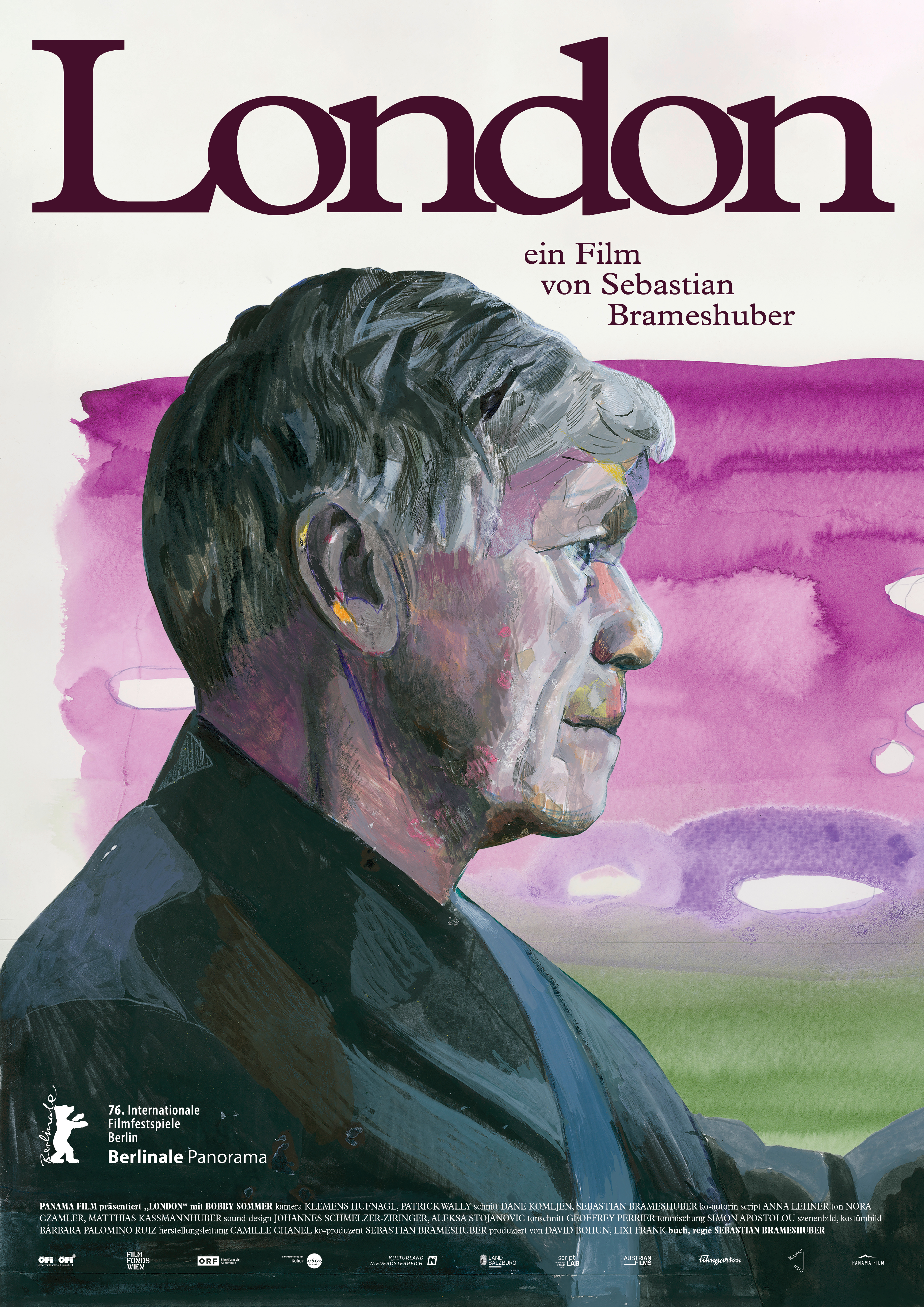
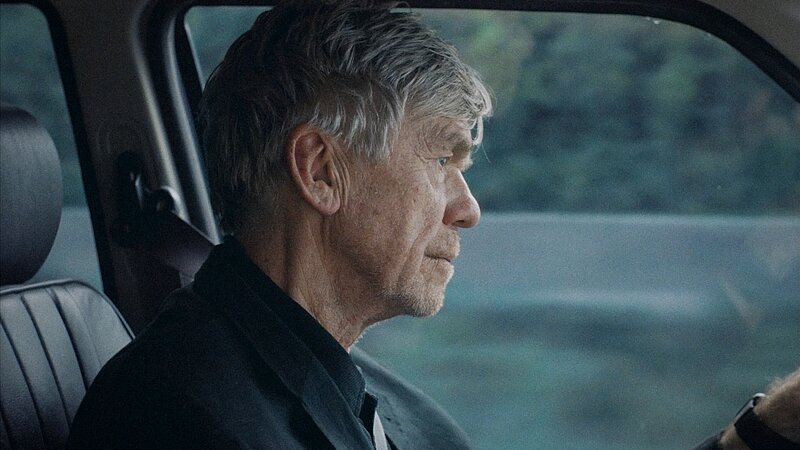
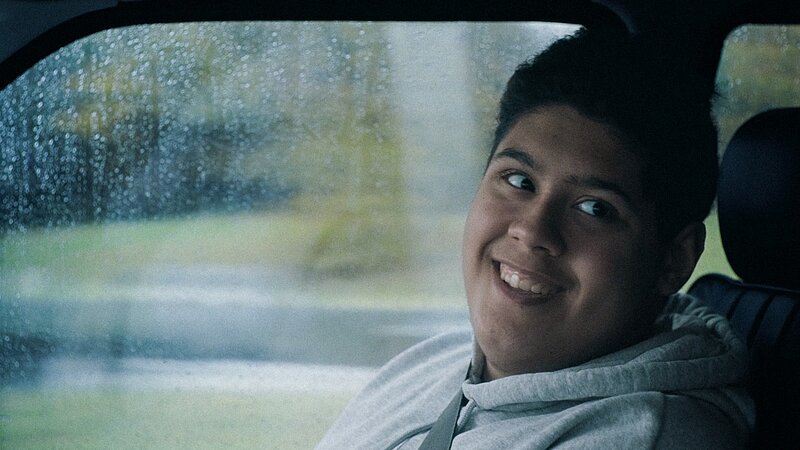
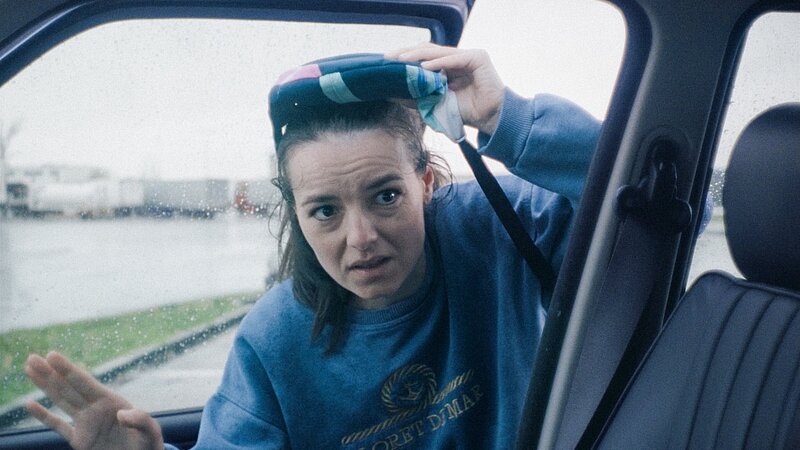
Buch
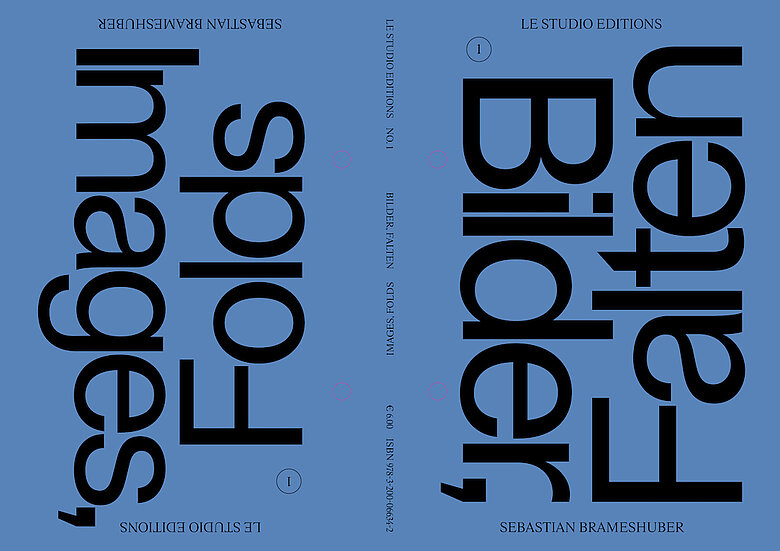
Ein Buch wie ein Splitter.
Als Bilder-Splitter arbeiten sich die Filme von Sebastian Brameshuber an menschlichen Akten und Verwerfungen ab und eröffnen dabei mögliche Welten – bewohnbare Welten. Das vorliegende Buch versucht, diese zu vermessen und zu verzeichnen.
ISBN 978-3-200-06634-2
Erste Auflage: Oktober 2019
Sprache: Deutsch, Englisch
Texte: Alejandro Bachmann, Esther Buss, Stefan Grissemann, Eve Heller, Michelle Koch, André Siegers, Claudia Slanar
Herausgeber: Alejandro Bachmann
Erhältlich u.a. im Satyr Buchhandlung (Metro Kinokulturhaus, Wien)
B E S T E L L U N G E N
Versandkosten/shipping costs Österreich: €3,-
Versandkosten/shipping cost EU+CH: €6,50
Versandkosten Weltweit/shipping cost worldwide: €11,-
Preis: € 6,00
Paypal oder mit Überweisung
Bestellungen: kontakt@lestudio.at
Interview (EN)
London: Oscillating Between the Real and What Extends Beyond It
Alejandro Bachmann in conversation with Sebastian Brameshuber
When I think back to my experience of watching LONDON, I notice that it’s no longer so easy for me to say what was at the centre of my thinking, maybe because it never existed in the first place. It’s clear that Bobby is the protagonist, we get to know him a little bit better with each new passenger he takes with him in his car. But at the same time, there are all the themes which come up in the conversations on the one hand and then there is the motorway itself on the other, which also somehow becomes a character over the course of the film, with a visible form, specific traits and a story. To me, all the driving back and forth between Vienna and Salzburg is akin to a series of brushstrokes or camera movements carried out with suitable calm to gradually create a painting or a film in which all these various things are tied together. So I’d like to start with a very simple question: what was the starting point for this project – a theme, a person or the motorway?
The starting point was my own experience of hitchhiking, albeit the officialised version of it via the internet. It was the end of 2012, and I was in love with someone who lived in Berlin. The cheapest way to go there was to get a lift with someone already driving there. I noticed how close you get to someone in that setting, although you’re complete strangers. The many hours you spend together in that rather intimate space – inside the car —are accompanied by a strange internal calm and a focus on the person you’re speaking to, together with a heightened self-awareness that fascinated me. I used to explain it to myself like this: you’re sitting there relaxed while also tearing down the motorway at the same time, you’re efficiently moving towards a destination while not actually doing anything at the very same moment. This paradoxically satisfying feeling is fuelled by the monotony of the drive and the landscape film that is constantly playing out behind the windscreen. Then there’s the curiosity about who you’re dealing with and the noncommittal nature of the encounter, as you’re likely never to see each other again once you arrive. When speaking with a stranger, you can also deliberately bring a particular version of yourself to the fore (or even create a fiction). You also spend a lot of time looking straight out in front of you while talking. That creates a special form of conversation, a dialogue in which some moments resemble a monologue, when the person you’re talking to dwells on a particular thought at length while caught up in the flow of the drive. There are parallels here to the set-up used in psychoanalysis. You lose yourself in the conversation more and more with each passing kilometre, a conversation that doesn’t follow a particular purpose and can wander between everyday questions and personal themes. And then there are moments when no one says anything, when it’s just about driving, and the constant sounds of the car and the road carry the situation. Back then, I would film ever longer sequences through the windscreen – of the foggy landscape between Vienna and Berlin in autumn and winter – while the conversation continued in voiceover, as it were. That led to the idea for a minimalistic film: just landscape through the windscreen and conversations between different people heard in voiceover that form a loose portrait aimed at capturing the feeling of a time. A bit like James Benning’s and Bette Gordon’s United States of America from 1975, just with conversations instead of the radio playing.
This type of conversation is something that you don’t just see in the film but also experience directly: I repeatedly felt like each passenger was actually talking to me, I had the feeling that he or she was addressing me and I thus also felt compelled to take on a stance towards them: did I like the person, did they seem familiar to me, do I know people like them, how would I be reacting right now etc.? This sensation is created by the different camera positions, but also by the editing – such as when Bobby’s reactions are shown at some points but not at others, which thus leaves me more or less alone with the person sitting next to me. Bobby is therefore a little bit like a stand-in for those watching, a cinematic proxy of sorts. And yet he also becomes an ever more detailed character over the course of the film, with a past, a story, yearnings, desires, etc.
When working with Bobby, it was crucial to convey precisely this idea to him: how important it would be to hold back in the conversations in order to give the passengers next to him the greatest possible amount of space. His character was only supposed to gain in depth over the course of the film – precisely because he, unlike all the others, is there the entire time. He had to trust in revealing himself slowly like that. In addition, I deliberately didn’t shoot the encounters with two cameras but rather with one: I first filmed the shot of the passengers, followed by a loose repetition of the conversation with the camera on Bobby. This created some productive restrictions during the editing process: not everything could be connected to everything else; the shots had to be longer, the dialogue across a conversation became more elliptical, less obvious. I borrowed this method from Abbas Kiarostami and adapted it for this film. During the conversations in The Taste of Cherry (1997), Kiarostami himself was at the steering wheel and speaking to the people in the passenger seat. It was only much later that he filmed the countershots with an actor who took his place, reestablishing a new unity of time and space during the editing process. For London, it was essential for Bobby to be always in the driving seat and conduct the conversations himself, for he and the person he becomes over the course of the narrative carry the film. In order for me to be able to communicate with him during takes, some of which lasted for more than an hour, he had a small receiver in his left ear—on the “dark side of the moon” that you never see. Bobby had to integrate this additional voice in his head both into the process of playing himself as well as into the fictional part of his character. That created an interesting tension, whereby he was juggling a lot of things at the same time, and I’m happy and grateful that it worked out. It helped that we’d known each other well for a long time already. I first met Bobby in person in 2013, when I recorded him reading a Bertolt Brecht poem for my film Of Stains, Scrap and Tires (2014). I’d seen him on the one hand as the actor from Jem Cohen’s Museum Hours (2012), which I liked a lot, and knew on the other hand that he worked as a driver for the Viennale. He also reminded me of Warren Oates as GTO in Monte Hellman’s Two-Lane Blacktop (1971), another important reference for this film. Bobby told me a lot about his time in the late 1970s and 1980s in Berlin, and based on all that, I told him about the project and sent him Two-Lane Blacktop to watch. From that point on, we were in regular contact about the project – back then with the idea that the trips should take place between Vienna and Berlin and that the film would revolve around Bobby’s past there.
That brings up two more questions, both of which have to do with the intertwining of documentary and fictionalising practices: in London, you always think that you’re on the trail of some sort of truth – the truth behind each of the passengers, the truth behind Bobby, the truth behind the motorway. And at the same time, you notice there is also some considerable fictionalising taking place: such as how the weather and the atmosphere created by the light along the motorway relate to the content of the conversations or in the form of the film’s narrative arc, which becomes maybe most evident when the first hitchhiker turns up again towards the end. How would you yourself describe how fiction and documentary are intertwined, perhaps starting with two ideas in particular: the portrayal of the characters by way of their stories on the one hand, and the shooting of the scenes in a studio setting and the use of rear projection and lighting effects etc. on the other?
Essentially, there is one central fictional arc that allows the film to branch out in different directions, mainly in a documentary mode. The central arc tells the story of Bobby, who visits Arthur for months until he eventually passes away. That story is narrated in very restrained, fragmented fashion, and gains emotional heft for precisely that reason.
When you and I conducted a similar conversation last time, back in 2018, I mentioned that Bewegungen eines nahen Bergs represented a sort of liberation for me in terms of having the courage to included increased amounts of stylisation in my films – based on my experiences during my studies at Le Fresnoy in France. For its part, London was preceded by an emotional learning process, although this time the school was life itself. My father died unexpectedly in 2019, and I often had to drive back and forth on the Westautobahn between Vienna and the Salzkammergut, the region where I’m from. Back then, something opened up in me at an emotional level – and never went away again, even after the active stage of grieving was over. Two years later, my son was born, and I opened up even further. It was important to me that this shift in my thoughts and feelings be expressed in the film – which, given my more sober disposition, also in my work, required me to step out of myself. That’s ultimately why the film is so much about fathers and sons, parents and children, about the beginning and the end of life – about what comes before us and what will endure after we’re gone. For Bobby, growing old and losing friends that he might have wanted to say something to, was also becoming an increasingly intense experience.
As far as the “characters” alongside Bobby are concerned, it’s probably best to describe the process in order to make clear how their specific portrayals came about. There was a casting aimed at finding very specific people – such as conscripts. Paul, the first passenger, was doing his compulsory military service at the time of the casting; by the time we started shooting though, he’d already completed it a few months previously. He thus relived his recent past for the film. But how he actually did that, how the conversation would develop, how he would express his moral reservations about his position – which I knew he had – and how Bobby would react, all that emerged directly during their joint “trip” in the studio.
Their encounter resulted in at least three hours of material, around an hour and a half on each side of the car. Only just under 15 minutes of that is in the film though – a heavily condensed version of their encounter in terms of both atmosphere and content. It’s also the only trip during which the light conditions change so strongly, because it starts off sunny, then gets darker and finally becomes night. That was planned in the hope that the content of the conversation and the lighting mood would work together to create an atmosphere, although it was unable to be controlled, or only to a small degree. We ran the risk that passages that belonged together would not be able to be combined in the montage because of the differing light conditions. But for this first trip, which was supposed to set the tone of the film, it was important to take that chance.
On the other hand, we also created a very vague casting profile to find younger people whose characters, biographies and immediate life situations would make them into interesting passengers to play a version of themselves in the film. They were basically supposed to be “good people” who wear their heart on their sleeve and would be willing to get talking with Bobby about their lives or life plans. It was slightly different with Fred, whose character is closely linked to the real character of the performer, filmmaker Ted Fendt, although his interest in the history of the motorway is invented, as well as with Anca, the Romanian migrant worker who Bobby picks up along the way: Anca Cipariu is the only professional actor in the cast.
There is a constant interaction between documentary and fictional strategies which permeate each other, although the fiction elements were more minor and always of a functional nature – in the sense that they gave the wealth of documentary, improvised material that emerged from the freely conducted conversations a form, a direction and a frame. Much of what now comes across like a deliberate choice – in particular when the mood of the weather and light seems to fit to the content of the conversation – was actually created autopoietically. That’s a mechanism that shouldn’t be underestimated – provided that the framework conditions have been set out in narrow enough fashion for it to function.
To sum up, my idea was to use the cinematic apparatus to shape the improvised, documentary immediacy of the encounters – which made up the majority of the raw material – in such a way that what’s been filmed to certain extent becomes untethered from its factual basis and an “impure” documentary cinema is produced that oscillates between the real and what extends beyond it.
The corresponding space for this was able to be created in the studio on several different levels. On the one hand, it functioned as a sort of “concentration machine” that did away with the uncertainties and risks of shooting in a car racing down the motorway – and not just in relation to life and limb. It was mostly silent in the studio, a silence that was full of concentration or that I would almost describe as monastic; in a moving car, those speaking would have had to talk over the engine and the sounds from outside. The sound levels of the film and thus also its entire tonality would have been completely different.
It’s similar with light: the name “Westautobahn” suggests that the motorway moves directly westwards, but there are obviously curves in the road and the sun can change position entirely over the course of just a few minutes or kilometres. This means that it would have been impossible to avoid the shadow of the camera or the microphone covering the faces of those being filmed at certain points. The camera position we chose – and thus the focal length and framing – would also have been impossible outside the studio; it would have demanded considerable aesthetic compromises. But it was important to me to give these conversations – that raw immediacy that deliberately didn’t focus on conflicts but rather works with the quotidian as a material – a lustre and a dignity that allow them to transcend their seeming banality. The strange thing is that when you directly experience something in real life, your consciousness filters out the accompanying circumstances, also in your memory. I didn’t notice that I had to speak louder and I didn’t care whether the sun was shining or from what direction it was doing so; I was only aware of what was important at that moment – the person I was speaking to, myself, the encounter.
It’s different in cinema. To achieve what was important to me, I needed a certain amount of artificiality in order to create the naturalness and concentration I was looking for in the first place. Working in the studio to avoid the unpredictability of the real-life shooting situation allowed the human encounters there to be given the greatest possible space in turn to actually happen and unfold freely.
As I also know Ted Fendt a little bit, what you’re describing becomes particularly tangible with respect to him: I see Ted, I see his character and I see how they merge. I see his real fascination for things and how he looks at them, also in terms of cinema, and I see the construction that allows his interest in motorways and bridges to find its way into the film. And it’s primarily this character that leads us to one of the stories behind the motorway, which links to the history of the 20th century in Austria in turn. That could maybe lead us to consider the extent to which both the people in the film and the narrative construction relate to very concrete things – such as their specific personalities, the material realities of the motorway, the feeling of travelling along the motorway – and at the same time transcend this to reflect upon the present, the state of society in a more abstract sense – living in a post-migrant world, the possibility of an upcoming war, things like this.
The state of society is obviously part of the film, but it’s treated in a deliberately open way, which is why I don’t want to spell it out here. At a time in which divisions have come so much to the fore, it was important for me to make a film which emphasises all the things that we have in common. Apart from that, the central question for me was the charged relationship between historical and personal realities, the question of how the past pervades the here and now at various different levels.
For me personally, the Westautobahn functions almost like a drivable strip of magnetic tape which holds memories running from childhood all the way into the present. Every trip on it is a trip down memory lane. Sometimes it’s a particular point in the landscape, at other times it’s the light, the weather, a sip of bad service station coffee or a piece of music that awaken memories of a moment or a phase in life.
At the same time, there such a deep vein of history running through this road that even I myself wasn’t aware of for a long time and which remains largely invisible for the everyday person travelling on it. The landscape film that unfolds behind the windscreen still follows a script written by the Nazis – even if many parts of it have been “blacked out” in the meantime due to the noise barriers. It’s only at certain times that you can imagine how the gaze of the driver was supposed to be directed, such as close to the town of Sattledt, when the Traunstein mountain appears in the centre of the frame and you have the impression that a theatre backdrop is hanging over the horizon. Beneath the carriageway, there are several bridge structures that testify to this road’s origins, but they remain out of view from those speeding over it.
At some point, I began to imagine the A1 like a river upon whose banks stories and history have become deposited like sediment – past and present, private and political, banal and existential. The conversations in the film sometimes stay on the surface, sometimes they go down into the deeper layers beneath. But gradually, you get the increasing impression that the immediacy of everyday life becomes ever more pervaded by history with each new bend in the river. Such as when Jon, the young Communist, proudly tells the story of his grandfather’s Partisan heritage, which has become part of his identity; or when Bobby links his own’s father character back to the trauma he suffered during the war, which he as his son had to contend with. Perhaps it is exactly this sort of intertwining that conveys the current state of the present without putting it on display.
When thinking about history, I also find the narrative movement made by the film interesting. Although there is something like a beginning and an end – the moment when Bobby will stop driving that route because his friend is dead – the way in which the narrative moves is somehow also a back and forth, a movement that eventually peters out and that is perhaps more about collecting – a bit like what Ursula LeGuin describes in The Carrier Bag Theory of Fiction. If I keep thinking in that direction, I also ask myself how that can be related to male protagonists, who, according to LeGuin, are associated with the adventure story and its arrow-shaped construction.
Without knowing the theory you mentioned in detail, I really like the image of the basket and collecting, which feels very fitting for London. Intuitively speaking, in the sense of aesthetic preference and as a viewer, I feel an affinity for open dramatic structures that develop their internal tensions from a wide range of different elements that are not structured according to some sort of hierarchy during the editing process but rather placed alongside one another together with ellipses. In my case, this is preceded by a process-based working approach, a process of documentary collection, if you will, which less resembles what you harvest from a field than what you come across foraging in the forest – where you don’t exactly know at the beginning what you’re going to find. The multi-faceted nature of the material already predetermines a different type of dramatic structure than the classical one. It includes an invitation to the audience to get involved in writing the film. Kiarostami used to speak about the importance of “holes and cracks” for the audience to climb into, and Frieda Grafe was of the view that the reality being depicted was just as important as how it is seen; that the “auteur” has relinquished some of their power by making the viewer into a co-producer. I really like the idea that a film extends beyond the person who made it.
One mental image I use in my work is that of a black hole. You can’t actually take a photo of it, but you can photograph the dust and the gases being pulled towards it in order to describe its outline. Right at the beginning of our conversation, you said that it’s no longer so easy for you to say what the film is actually about. I share that feeling, and yet to my mind, there is a gravitational centre in London that can’t be explicitly named, but whose outline becomes visible through the material collected. Bruegel’s painting The Procession to Calvary works in a similar way: there is a narrative, a centre, a movement, although there are countless parallel and secondary settings at the same time that are sometimes even more prominently positioned than the “leading actor” collapsing under the weight of the cross. Every time you look at that picture, it comes to life in a different way. And a film too becomes filled with life and doesn’t have a fixed meaning by way of an open dramatic structure of that kind. I feel like I’m taken seriously in such films – and I therefore feel at home in them. At the same time, there are also films and dramatic structures that I feel less at home in, but still have a desire to see. Not every moment in life calls for the same dramatic structure and the same kind of film. Every now and then, I enjoy eating at McDonald’s.