
Everything Else is Noise (Lo demás es ruido)
Info
MX/CA/DE-2026, 71 Min., Scope, 5.1, spanische Originalfassung mit deutschen Untertiteln
Regie, Kamera, Schnitt Nicolás Pereda | Buch Juan Francisco Maldonado, Nicolás Pereda | Musik Violeta García | Sound Design Guido Berenblum, Gerardo Kalmar | Produzentin Catalina Pereda | Koproduzentin Kristina Konrad | Eine En Chinga Producciones Produktion | in Koproduktion mit weltfilm
mit Teresita Sánchez, Rosa Estela Juárez Vargas, Luisa Pardo, Lázaro G. Rodríguez, Francisco Barreiro
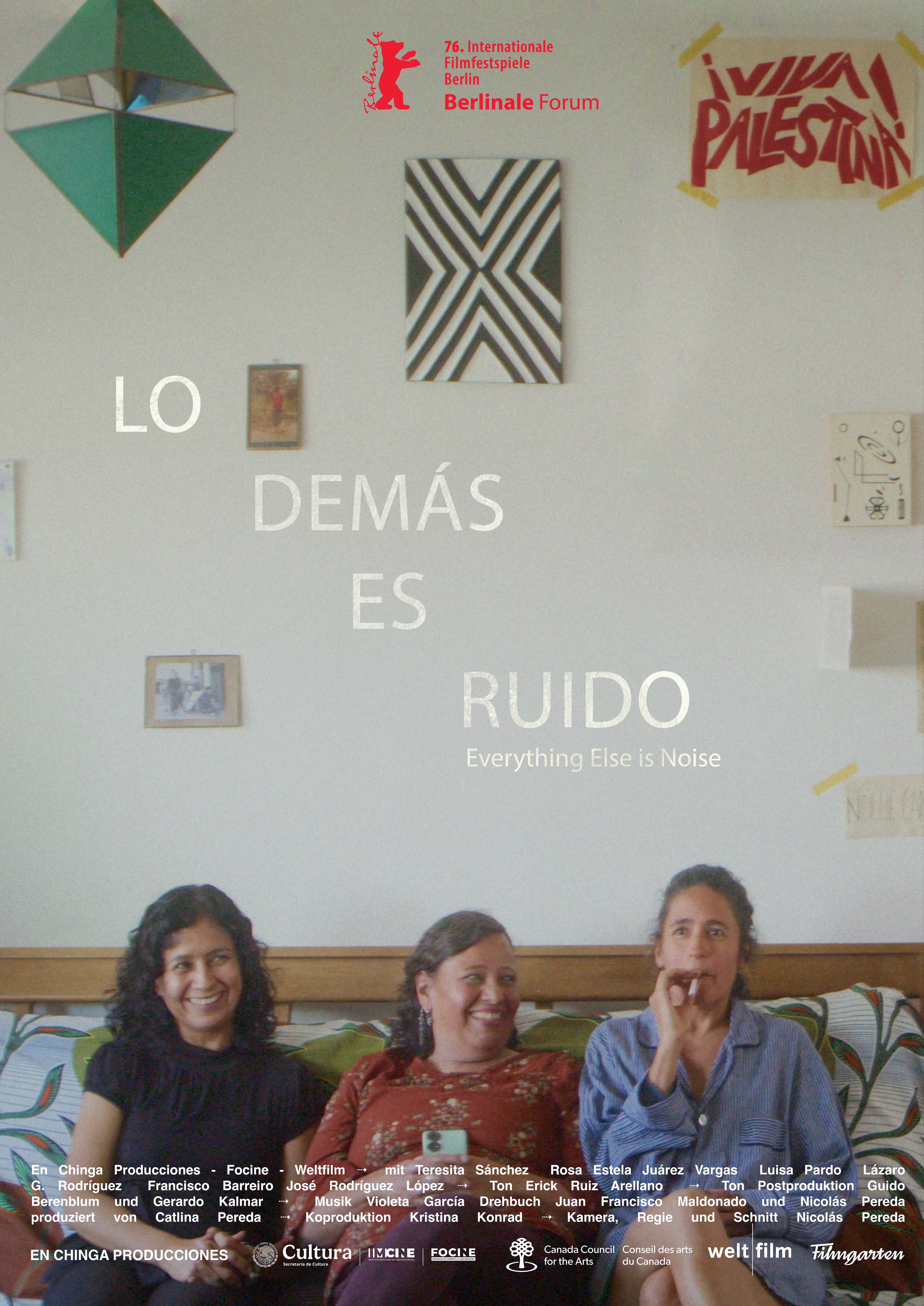
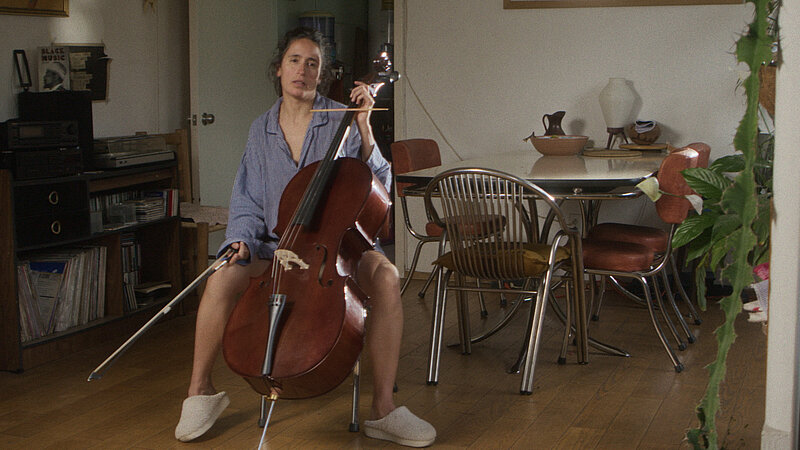
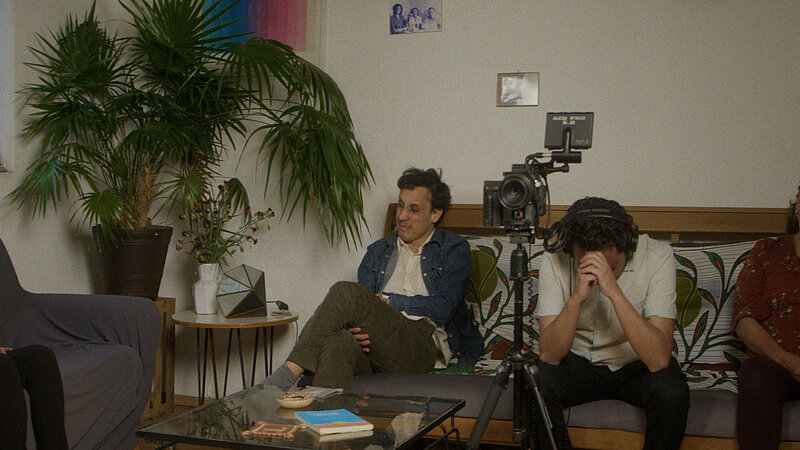
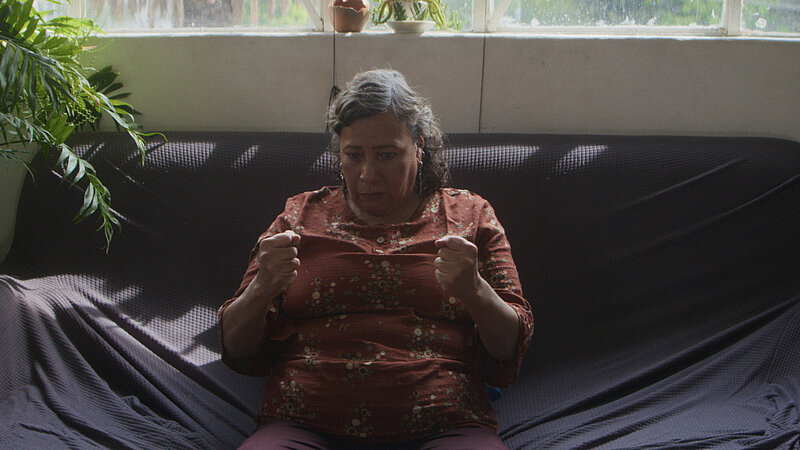
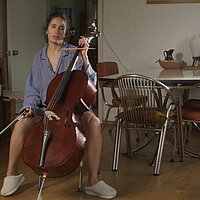
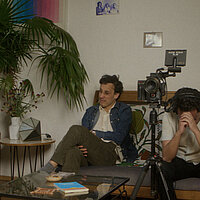
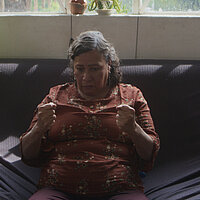
In Mexiko öffnet Tere, Musikerin und Komponistin, ihr Zuhause für das Fernsehinterview einer befreundeten Musikerin. Um die Freundin zu beruhigen, erzählt Tere eine exzentrische und charmante Geschichte darüber, wie ihr außergewöhnlich feiner Geruchssinn ihre Kompositionen inspiriert habe. Doch kaum beginnen die zwei Journalisten das Interview, gerät es aus der Bahn, wird unterbrochen und aus dem Takt gebracht: Außengeräusche dringen herein, Maschinen spielen plötzlich auf – und Teres Tochter, eine junge Frau, platzt mit erfrischender Ironie und schonungslosen Reality-Checks in die Szenerie. Mutter und Tochter, beide scharfzüngig und geistreich, schmieden ein zärtliches Bündnis, das die Hypokrisie der Kunstwelt lustvoll zum Einsturz bringt. Sie entlarven Name-Dropping und snobistischen Gestus, verspotten Sexismus und feiern stattdessen eine ehrliche, unprätentiöse Nüchternheit – und das klare Bewusstsein zweier Frauen, die nahe am, aber doch außerhalb des begehrten Machtzentrums des Ruhms leben. In minimalistischer Form wird dieses absurd-komische Kammerspiel zum Beweis, dass sich das Außergewöhnliche im Alltäglichen verbirgt – und dass Lärm und Musik untrennbar dazu gehören.
Pressespiegel
„Ein beachtliches Kammerspiel, mit subtilem Humor und einem spielerischen Inszenierungsstil.“ Movie Break
„Ein listig vergnügliches Arthouse-Erlebnis und eine feinfühlige Familienkomödie.“ Journey into Cinema
„Das Ergebnis, mit minimalen Mitteln und beeindruckender konzeptioneller Klarheit umgesetzt, ist ein Porträt der faszinierenden Welt der zeitgenössischen Musik und ihrer Akteure – ebenso humorvoll wie scharfsinnig und tief empfindsam.“ Micropsia Cine
★★★★☆„Nicht nur ein unglaublich unterhaltsamer Film, sondern auch ein Werk über das Kino, den Klang, die Musik, weibliche Rollen und Männlichkeit.“ Otros Cine
„Ein streckenweise sehr komisches, leichtfüßiges kleines Kammerspiel über Rivalitäten und Eifersucht und über die ewige männliche Dominanz im Hochkulturbetrieb. Und es endet mit einer herzerfrischend beiläufigen Demonstration weiblicher Solidarität, die nachhaltig gute Laune macht.“ rbb
„Es ist witzig, sinnvoll und ein aufregender Schritt. Der Film ist leicht zugänglich und gipfelt in einer finalen Konfrontation, die überraschend befreiend wirkt. “ cineccentric
Biografie
Nicolás Pereda ist 1982 in Mexiko geboren und studierte Film an der York University in Toronto.
Sein Werk erforscht samt fiktiven und dokumentarischen Werkzeugen den Alltag durch gebrochene und elliptische Erzählungen. Oft arbeitet er mit der Theatergruppe Lagartijas tiradas al sol und der Schauspielerin Teresita Sánchez zusammen. Seine Filme sind in mehr als 30 Retrospektiven um die Welt getourt, u.a. im Anthology Film Archive, Pacific Film Archive, Jeonju Film Festival und der TIFF Cinematheque. Seine Filme sind in den meisten großen internationalen Filmfestivals gespielt worden, von Cannes, Berlinale, Venedig, Locarno und Toronto bis zu Viennale, sowie in Galerien und Museen wie im der Reina Sofía in Madrid, dem Musée national d’art moderne in Paris, dem Guggenheim oder dem MoMA in New York. 2010 wurde er bei den Filmfestspielen von Venedig für Verano de Goliat mit dem Orizzonti-Preis ausgezeichnet.
Filmografie
Everything Else is Noise - 2026
Cobre - 2025
Lázaro de noche - 2024
Flora - 2022
Querida Chantal - 2021
Fauna – 2020
Mi piel, luminosa * Koregie Gabino Rodríguez – 2019
Historias de dos que soñaron * Ko-Regie Andrea Bussmann – 2016
Minotauro – 2015
Los ausentes – 2014
El palacio e – 2013
Matar extraños * Ko-Regie Jacob Schulsinger – 2013
Los mejores temas – 2012
Verano de Goliat – 2010
Todo, en fin, el silencio lo ocupaba – 2010
Perpetuum Mobile – 2009
Entrevista con la tierra – 2009
Juntos – 2009
¿Dónde están sus historias? – 2007
Festivals & Preise
Drehbuchpreis - bildrausch Basel
Bester Spielfilm - Las Palmas IFF
GNCR Preis - FID marseille
Avant-Garde Preis - Bafici (Buenos Aires IFF)
Bester iberoamerikanischer Film - FICCI
Berlinale'26, Jeonju IFF, Bafici, IndieLisboa, Cartagena Film Festival, Lichter Filmfest Frankfurt, European Media Art Festival Osnabrück,
Material
Interviews
A film family and co-authorship - Francisco Bareiro - Filmexplorer podcast
Regie-Notizen
Images aushandeln, Lärm reflektieren
Den Alltag durch Wiederholung und Variation betrachten
Everything else is noise ist ein Film über drei Künstlerinnen – Rosa, Tere und Luisa – die sich in unterschiedlichen Lebensphasen befinden und deren Alltagserfahrungen zeigen, wie die sozialen und kulturellen Veränderungen der letzten Jahrzehnte ihren persönlichen und beruflichen Werdegang geprägt haben. Anhand von Gesten, Gesprächen und Schweigen beobachtet der Film, wie soziale Erwartungen, Ungleichheiten zwischen den Geschlechtern und Dynamiken der Anerkennung die Art und Weise beeinflussen, wie sie künstlerisch arbeiten, Beziehungen eingehen und sich in der Welt bewegen. Der „Lärm“ im Titel hat mehrere Bedeutungen: der Lärm des Verkehrs, der Stimmen und Maschinen, aber auch die Ablenkungen, Vorurteile und Anforderungen, die das innere Erleben der Frauen überschatten.
Der Film betont den Lauf der Zeit und die subtilen Details des Alltags. Die Kamera bleibt aufmerksam und fast unbeweglich, sodass sich das tägliche Leben ganz natürlich entfalten kann. Licht, Ton und der langsame Rhythmus der Handlungen schaffen einen Raum, in dem sich Sinnliches und Emotionales vermischen. Das Fernsehinterview, das sich durch den Film zieht, regt zum Nachdenken über Repräsentation und Performativität an: Wir beobachten, wie die Protagonistinnen unter den Blicken der Medien um ihr Image ringen und Gesten und Antworten wiederholen, bis die Künstlichkeit der vermeintlichen Spontaneität sichtbar wird.
In Everything else is noise fungieren Wiederholung und Variation sowohl als narrative als auch als konzeptuelle Mittel. Geräusche – das von Luisa gespielte Cello, das anhaltende Bellen, die Stromausfälle – schaffen einen Dialog zwischen dem Intimen und dem Urbanen, zwischen Musik und Lärm. Anstatt eine Geschichte im traditionellen Sinne zu erzählen, lädt der Film zu einer zeitlichen und sinnlichen Erfahrung ein: eine Aufforderung, den Alltag als einen Raum des Geheimnisvollen, der Verletzlichkeit und des stillen Widerstands zu bewohnen.
[aus Berlinale Forum]
Interview (EN)
Long-Term Collaborators
The director discusses his meta-genre experiment and the (un)translatability of comedy
Das Gespräch wurde auf Englisch geführt.
Barbara Wurm: It’s really wonderful to have your film in our line-up. It’s going to be one of the most hilarious and humorous films. When we were watching the film together during the selection, it was sheer pleasure – a firework of wit, intellect and heart. We truly loved the film and are very happy that you’ll be with us. It would be interesting to know how long you usually digest a new film project beforehand, and how you conceived this one.
Nicolás Pereda: I have a strange process, because lately I’ve been making several films one after the other. I premiered a film two years ago, another one last year, but I actually started writing this film about three years ago. This project came out of nowhere for me, because I’d been working on films that were much more directly political – about the Mexican situation, violence, and the representation of violence – subjects that felt more conjunctural, more pressing, more urgent. But then, I’d spent some time with my mother, which I hadn’t for a while, and she’s a classical music composer. She was talking to me about her life as a composer. Her generation was the first to form a group in Mexico. There had been female composers in Mexico before, but not as a group. They were total oddities, and her generation was perhaps the first in which that seemed possible. The way she spoke about it was always rather funny. Then I’d seen several press briefings with different composers together. When I’d go with my mother to the launch of a CD, a compilation by several composers, I’d watch them speak. There was something lacking in their interactions, but also something amusing: the camaraderie, the fact that they cared about women supporting one another. Yet there were also all the other things that come with being human – jealousies, frictions, the inevitable tensions of any group. So I thought that a combination of all of that might turn into something interesting. Then, when I premiered a film in Mexico called Fauna (2020), it was the first time a distributor made me do endless interviews. For the kinds of films I make, when they get distributed, I already accept that there’s no prospect of a commercial release. So it doesn’t make much sense to do the usual promotional interviews. But I did it because he asked me to. I went from radio station to radio station, from blogger to blogger, at first with the whole cast, because they were the same group as in Everything else is noise. And it was hilarious, because people who hadn’t seen the film were asking very superficial questions just to get the job done. And I understand – reporters are paid almost nothing and have to cover as much as possible for very little. They didn’t want to be there. We didn’t want to be there. But we were talking about something we really cared about, and that made it funny. At some point we just started laughing with one another. So in a sense, the experience of those interviews – with people who couldn’t care less about what we were discussing, who didn’t know the work or what we’d done before – combined with time spent with my mother and her world and her stories, made me feel there was something there. A third thing that mattered was that while I was writing – it’s in the credits – I watched a film by the British visual artist Tacita Dean called 150 Years of Painting. It’s basically an interview with two women painters. One is a hundred years old and one is fifty. There was something so beautiful about that interview that I copied about two and a half minutes of it into my own film. I had to modify it, because the circumstances are different. In Dean’s film, one of the artists says she began painting because of her sense of smell. That’s something I stole, because I found it funny. But in Dean’s documentary, she said it earnestly. Nobody laughed in the cinema or in the film itself. It’s almost solemn, the way she speaks about it. I used the same text, the same dialogue, and suddenly it became funny. Then I remembered that my grandmother used to say that when she wore gloves she couldn’t hear. So I added that, thinking about people whose senses are interconnected in these drastic ways. I suppose all these little things helped the film come together.
What I attempt with these actors is psychological transformation without physical transformation.
Yun-hua Chen: It’s fascinating to see how you gather material from different sources like a collage, and that’s the feeling of authenticity in the film, which runs parallel to the performative aspect. For example, the cast are your friends, but they’re also playing roles, and the roles themselves are also versions of them. How do you think about that relationship between authenticity and performance?
NP: It’s a difficult question, because it grows organically from working with them. I’ve worked with them for a long time and I’m very comfortable around them. I recognise them as people, as my friends, even when they’re performing these other characters. The boundary between who they are, how I observe them, and the figures I construct is very blurred. Psychologically they’re nothing like the characters, and when I see them on set, I see my friends. When I say ‘action’, the transformation is so subtle – the difference between who they are and the characters they perform – that it’s hard to detect. That gives me a sense of grounding. I teach film at a university, and when I teach fiction I often see how, when students say ‘action’, the actors’ souls seem to leave their bodies. You’ve all seen this in student work, right? That idea that something happens and suddenly they stop being human beings and become hollow figures. Of course, there are many forms of representation in which actors transform themselves while retaining humanity – great actors do that – but you also see this switch in many fiction films. What I attempt with these actors is psychological transformation without physical transformation.
BW: And do they think about what they’re doing or what methodology they use?
NP: My relationship to them is as artists. From the beginning, I send them the script, they read it, and I see what they come up with without my saying a word. I hardly have to tell them anything. I don’t really have to direct them. They understand how I want them to behave. I don’t ask too much about how they do what they do, because I don’t want that to become an issue when it’s already something I enjoy. I like the fact that they have a degree of agency when it comes to improvisation. The words I write don’t always have to be exact. For some of them they do, because they feel more comfortable that way. For others, they make up a lot of the words and want to improvise a little. There are no clear boundaries in the process, and in that sense it becomes a collaboration to the point that there are aspects of how they work that I don’t even know. I’ve always felt that if you perform as someone for whom this and that happened in the past, you risk diminishing the complexity of human experience. We behave more in relation to our unconsciousness than our consciousness – everything we carry from our lives, plus perhaps biological factors, pushes us in one direction or another.
BW: I was wondering how wide the gap is between the script and what actually happens in the dialogue, right up to the end of the film.
NP: In the final section, when Estévez, the father, the male composer, comes in, it stays fairly close to the screenplay, both in sequence and in what is said. Some of them deliver everything word for word. Rosa, for instance, says exactly what was written, while the rest improvise slightly. But they don’t add new sentences, they simply substitute phrasing they feel more comfortable with. The ending, however, was different in the screenplay. Something else happened originally – Lázaro didn’t stay for dinner. When we were shooting, Lázaro told me it would be better if he stayed. At first I thought he just wanted to save a day of shooting, because we were meant to film the ending the next day. But he quickly convinced me that it made more sense for him to stay for dinner, to finish there. We had never left the apartment up to that point, so it felt wrong to go elsewhere. At the same time, I didn’t have any written dialogue for them, so they improvised the entire exchange. When I hear it now, I think it’s funny in a way I would never have written. It was especially nice because they are father and son in real life, and Estévez isn’t a professional actor, so it was a wonderful opportunity for him to improvise a scene with his son.
YC: Your title, Everything Else is Noise, is very philosophical and multi-layered, and that is related to your use of sound. The characters carry sonic space with them, even when they leave the frame. Can you talk about your ideas of sound?
NP: My experimentation with sound came quite late in my filmmaking. I made several films in which sound simply accompanied the images. I cared about framing and acting, while someone else recorded the sound and I barely paid attention. When I realised that, I was surprised at how dismissive I’d been of such a major element. A few years ago I made a film that pushed these ideas much further, perhaps too far. It became slightly quirky in the sheer number of small experiments I attempted. I mixed the sound myself, which forced me to spend time learning through trial and error.
In that way, the location suddenly tied together all the film’s ideas about sound and noise.
For this film, I chose the location because it was a friend’s apartment I’d only ever visited at night. She often invited me over for drinks, and after ten in the evening the place is usually quiet. I’d co-written the script with a friend who also knows the apartment’s owner well, thinking about that space. And when I asked to use it, she said yes, but warned me that it was actually quite noisy. Another difficulty was that the actors had scattered: Teresita Sánchez became successful and had no time, Luisa moved to the countryside, and they no longer all lived in Mexico City, so gathering everyone was complicated. They’re also like family, and family is the easiest group to cancel on. So suddenly coordinating them became difficult, even though we’d been working together for years. The only window was 24 to 31 December, when no one works in Mexico and nothing is being shot, so we filmed right over Christmas, from the 23rd to the 31st. Very close to the apartment, there’s a huge shopping mall, and Christmas in Mexico means the heaviest traffic of the entire year in a neighbourhood that is already congested. When I arrived, I thought, how are we going to manage this? I looked at other locations because of the noise. The film even had a different title at that point. But then I spent time in the apartment listening to all that sound and started thinking about how the film dealt with contemporary classical music. Noise itself is a genre of music, after all, and suddenly, I realised that this made sense. The script already had dogs barking and neighbours complaining, and it became even funnier with so much more noise around them – why obsess over that one sound. In that way, the location suddenly tied together all the film’s ideas about sound and noise. It was entirely serendipitous: The concept emerged simply because I was working there. The scene in which they carry the sound with them is something I’d tried in another film, and I love the way sound can expand space – something we usually associate with camera movement or editing. But sound alone can construct space: You hear voices while looking elsewhere, and suddenly the world grows larger. You imagine the unseen room in your mind. There is also the possibility of being in two spaces at once. Before I began experimenting with this, if someone had said, ‘In this film you see two spaces simultaneously,’ I would have imagined a split screen showing two different places. But doing two spaces at once through sound is far more subtle than that. I thought it was wonderful to be able to watch how these women behave, especially the mother and daughter, when the others are no longer present, because we hadn’t seen them without the crew. At the same time, we gain a glimpse of the two secondary characters and something of who they are, without ever leaving the main figures. It felt like an exciting possibility to achieve all of that purely through sound. I also find it fascinating to think of the film as meta in many ways – not only because of the filming within the film, but because sound and noise are so prominent. It becomes a chamber piece, in a sense, and you could even describe it as a meta-genre experiment: chamber music translated into cinema, with different elements fading in and out, partially hidden by others.
BW: That’s really beautiful, I think – one of the many aspects that make the work intellectually challenging. You so often explore the boundary between documentary and fiction. Does the distinction matter to you, and at what point do you know a film works? How do you avoid becoming too abstract or conceptual while keeping the sense of a single, flowing piece?
NP: It’s become much more important to me over time, what you’re describing. With this film I can talk about those ideas: the chamber-music structure, the way interactions swell and recede, how one instrument becomes louder and then softer. All of that, and everything we’ve been discussing, feels important. At the same time, I think this is the most accessible film I’ve ever made. It’s incredibly simple. I believe anyone can watch it without engaging with those deeper layers. For me they matter – perhaps that’s why I make films – but the surface has become important too.
Much of my work draws on that culture, but here it’s more about how artists speak to one another, how interviews function. I wouldn’t call that universal exactly, but many cultures share those dynamics.
YC: It’s incredibly difficult to make a comedy that travels well and can be appreciated across cultures, and I wondered whether you already knew those comic moments would work internationally when you were writing the script.
NP: I didn’t think about it until I made Greatest Hits in 2012, one of my favourites, which simply doesn’t work outside the Spanish-speaking world. There’s a character who speaks extremely fast in a manner that is very specific to Mexico City, instantly recognisable there. Perhaps that’s cultural, but more importantly it relies on wordplay that is extremely difficult to translate. The same is true of Cantinflas, arguably the most important comedian in Mexican film history. To me he’s a genius, but he doesn’t work in other languages, and he isn’t widely known outside Mexico, not even across Latin America or in Spain. It isn’t just linguistic, it’s cultural. He improvised constantly and played with language. With this film, however, the comedy doesn’t arise from virtuosic language but from absurd situations, so it isn’t language-dependent. In that sense it moves easily across cultures. It’s also not necessarily Mexican in subject. Much of my work draws on that culture, but here it’s more about how artists speak to one another, how interviews function. I wouldn’t call that universal exactly, but many cultures share those dynamics. At the same time, contemporary classical music belongs to a Western tradition, and in that sense the characters are inscribed within something broadly European – though that tradition now exists everywhere, with so-called Western artists living all over the world.
BW: Nearly half the films in our programme are by women directors, and yet yours feels like the most overtly feminine, or at least the most pointedly emancipatory. It deals directly with universal gender gaps, and the plot itself is structured around them. I find that striking. Was that also connected to conversations with your mother?
NP: Yes, my mother has always been able to laugh at the famous men of her generation. She isn’t ambitious by nature, though she achieved a certain degree of success when I was young, and she’s comfortable with her position because she never cared about status. Yet she was always conscious of being pushed aside, along with other women, and she spoke about those men not with resentment but with humour – finding them slightly pathetic for how much they worried about their standing in such a tiny world. The world of contemporary classical music is extremely insular. There are only a handful of people. Everyone knows everyone else. The gains were minimal: a few more performances, a few more interviews. That’s why Estévez becomes something of a stereotype, slightly pathetic, because that was how my mother described those figures. I recently screened the film for five women composers, friends of my mother, at her house, and they were the perfect audience. They laughed at moments no one else does, especially when Estévez appears and they instantly recognise that man from their own lives.
YC: One of my favourite lines is when the daughter says she was going to change her pyjamas but now won’t, just to show her mother that the world will be fine regardless. Did you write that?
NP: Yes – it comes from the idea of emancipation viewed across generations, from people with different values and ideas about what that freedom means. When my mother spoke about her career she was dismissive not because she didn’t care, but because she didn’t feel the need to fight every battle. Luisa, by contrast, is younger and more restless, and believes each struggle is worth pursuing. That difference helped shape the mother/daughter relationship, which became central to the film.
[aus Berlinale Forum]
Buch
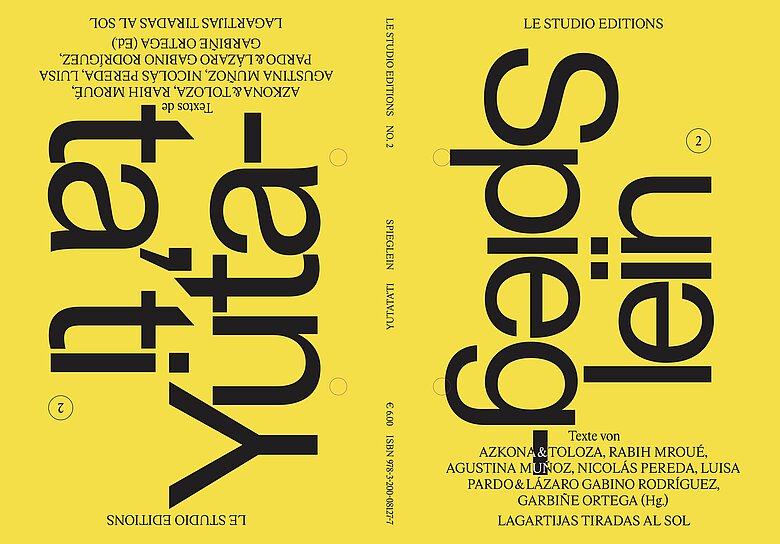
Die Frage, wie wir diese Welt bewohnen können, wie wir leben und Abenteuer – wie auch immer sie aussehen mögen – erleben, hat unter dem Motto „Das Fleisch der Worte, der Geschmack der Bilder“ die Programmierung von LE STUDIO Film und Bühne im Studio Molière in Wien von 2019 bis 2021 geprägt.
In diesem Rahmen haben wir denn auch – nachdem bereits geplant war, den Film FAUNA von Nicolás Pereda zu zeigen, und wir online die Performance Lázaro von Lagartijas Tiradas al Sol entdeckt hatten – alles daran gesetzt, Lagartijas Tiradas al Sol (Eidechsen, die in der Sonne liegen) für die Produktion eines Stückes (SPIEGLEIN/YUTATA'TI) nach Wien und in LE STUDIO einzuladen.
Die internationale Produktion eines Theaterstücks zwischen Mexiko und Österreich inmitten der Covid-19-Pandemie in den Jahren 2020 bis 2021 war freilich eine Herausforderung, und gerade weil die dafür erforderlichen Überlegungen und Mittel uns gleichsam dazu gezwungen haben, unsere Startpunkte zu verschieben, haben wir beschlossen, den Kosmos von Lagartijas Tiradas al Sol in Buchform zu teilen.
Jede Bewegung, jeder Schritt zur Seite, jeder verzögerte oder beschleunigte Atemzug kann dazu führen, dass man zuerst über die Welt, dann über sein Land, dann über seine Lieben und schließlich über sich selbst nachdenkt – und nicht in umgekehrter Reihenfolge. Als der Rückzug der Welt uns dazu brachte, zuerst an uns selbst zu denken, wollten wir diese Dynamik umkehren: Wir luden Künstler*innen ein, die sich mit den Weisen, wie Welten erzeugt werden, beschäftigen.
Lagartijas Tiradas al Sol bewegt sich zwischen den Medien, von der Bühne bis zur Leinwand, arbeitet mit Fiktion als Dokumentarfilm, Realität als Legende, arbeitet auf der Rampe – dort, wo die Abenteuer entstehen.
Lise Lendais und Pierre-Emmanuel Finzi
ISBN 978-3-200-08127-7
Erste Auflage: Dezember 2021
Sprache: Deutsch, Spanisch
Texte: Garbiñe Ortega, Agustina Muñoz, Nicolás Pereda, Rabih Mroué, Txalo Toloza-Fernández und Laida Azkona Goñi, Luisa Pardo und Lázaro Gabino Rodríguez
Herausgeberin: Garbiñe Ortega
Erhältlich u.a. im Satyr Buchhandlung (Metro Kinokulturhaus, Wien)
B E S T E L L U N G E N
Versandkosten/shipping costs Österreich: €3,-
Versandkosten/shipping cost EU+CH: €6,50
Versandkosten Weltweit/shipping cost worldwide: €11,-
Preis: € 6,00
Paypal oder mit Überweisung
Bestellungen: kontakt@lestudio.at